

The lights go out and the Warner Bros. logo is painted pink. A light, steady blast sounds, a kind of windy, enveloping hiss over the viewers; the black screen opens to a sunset. It is, literally, a sunset. The world is brown, stony, a desert. Crows can be heard in the distance and the rest is silence. The sky (or the future) is dark for those girls who drag strollers in their long, brownish dresses, wash clothes, serve tea, carry bottles and take care of their plastic children with their bald heads, their clothes and their blankets. They don’t play, they wander around like little mothers.
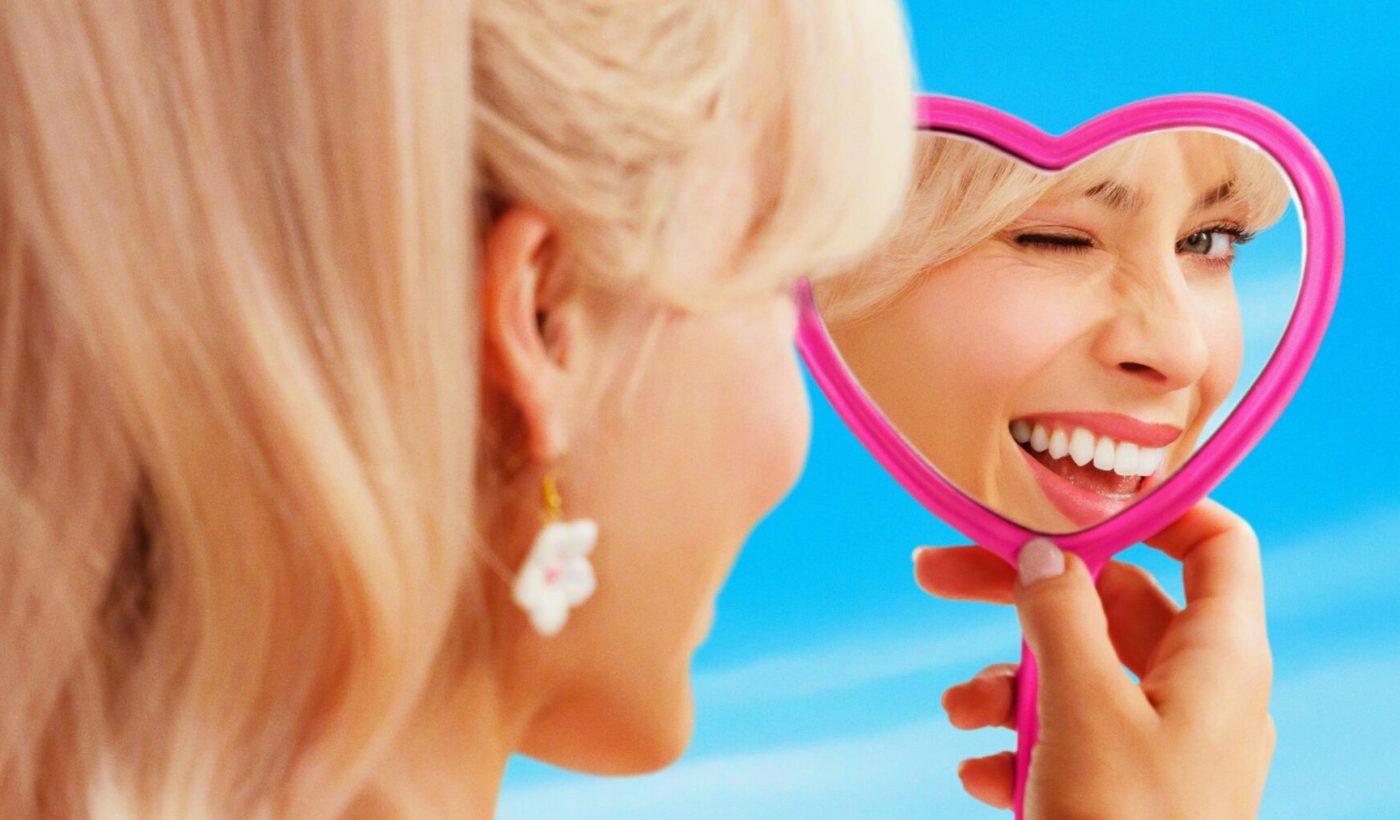
And suddenly, with the sun, comes the prodigy. Taller, thinner, brighter, more beautiful. A woman. We recognize her because she is Barbie, unique. She looks at the girls, smiles at them, winks at them and that is the signal to destroy her future children. Barbie is everything that didn’t exist before, she is the symbol of a new world and she watches it from the heights, as if it were her creation.
In fact, for nearly two hours, that world is the work of Barbie director, Greta Gerwig.
“Yes, Barbie changed everything,” the narrator tells us. That’s what Ruth Handler, the Barbie inventor, wanted to do with her creation, the toy for girls that became a universe. The story is well known: tired of watching her daughter Barbara playing dress-up and undressing flat paper figures, Ruth thought there was room for something more. It is said that the little girl preferred those adult-looking drawings to the three-dimensional, infantilized dolls offered by the market. Little Barbie didn’t like playing with babies either, and her parents were co-owners of an American toy manufacturing and distribution company, Mattel. Ruth sensed that her idea was unbeatable, so she insisted even after an initial rejection of her proposal (parents would not want to buy their daughters a doll with adult features and proportions) and ended up closing in her head during a trip to Europe. The story goes that he came across a German doll, Lilly, inspired by a cartoon that had been born as a kind of joke among men: a female doll, with buttocks and bust. Desirable.
And so comes Margot Robbie, the Barbie actress, to the brown world: with her legs, her heels, her painted nails, her red lips and her curves marked in her striped swimsuit. She is not afraid of horizontal lines, her waist is minimal and her measurements, perfect (unreal, they will say). Finally, in 1959, while the socialist revolution was triumphing in Cuba, the Chinese were invading Tibet and the Soviet Union was launching the first artifact to the Moon, Mattel launched a doll with a striped swimsuit that swept all before it: 350 thousand sold in one year.
The Handler’s children were two; Barbara named the star of the family and two years later, the youngest Kenneth, her accessory, Ken. Then Barbie had a boyfriend or neighbor and then a house and a story and a profession, she was the model Barbie and she also had a best friend and a sister. The motto, the promise to the girls was: “you can be whatever you want to be”. The toy very soon ceased to be a doll; what was asked for, what was sought, what was given, what was bought, was a Barbie. And, above all, it was sold. Every day, every week, every year, every three seconds a Barbie is sold in the world.
She is not only the most famous doll; very soon she was surrounded by adjectives: controversial, controversial, capitalist, hegemonic, stereotypical. The latter is the one that Barbie the director took to delineate the main character of her film and, together with Barbie the makeup artist, Barbie the art director and Barbie the costume designer, turned Margot Robbie into the stereotypical Barbie, the one that had begun to receive criticism shortly after going on sale.
Thus Mattel, to the rhythm of the critics and the times, was launching different versions that not only changed their wardrobe, car, house and profession but also their identity, features and appearance: black, Latina, Asian, androgynous, petite, curvy, in a wheelchair, with hijab. They are the inclusive Barbie, that’s how they promote and sell themselves. Far from dodging criticism, prejudices and fashions, Greta Gerwig and Noah Baumbach took them to write a script that picks them up one by one. As in Barbiland, in the film there is a Barbie for everything and everyone. Even a pregnant one because Barbie can also dream of being a mother.
We won’t spoil the story, but we can say that, in the face of so many different Barbies, it is Ken -just Ken- who gets the funniest moments, the most carefree and the most successful narrative arc. We will also say that Ruth Handler is honored with a small character in the middle of the film, returning to the foundational story of the entrepreneur who devised a doll based on the image of her daughter and the demands of a new generation of women.
And that’s how we got to know the Barbiemania against which complaints were also raised: some wanted to open our eyes and said (as if it were a revelation) that cinema is an industry and that Mattel wants to make money selling more Barbies and that now it does it through pinkwashing. With everything dyed pink, the word is an ironic and happy coincidence like the ones that happen in Barbiland.


