
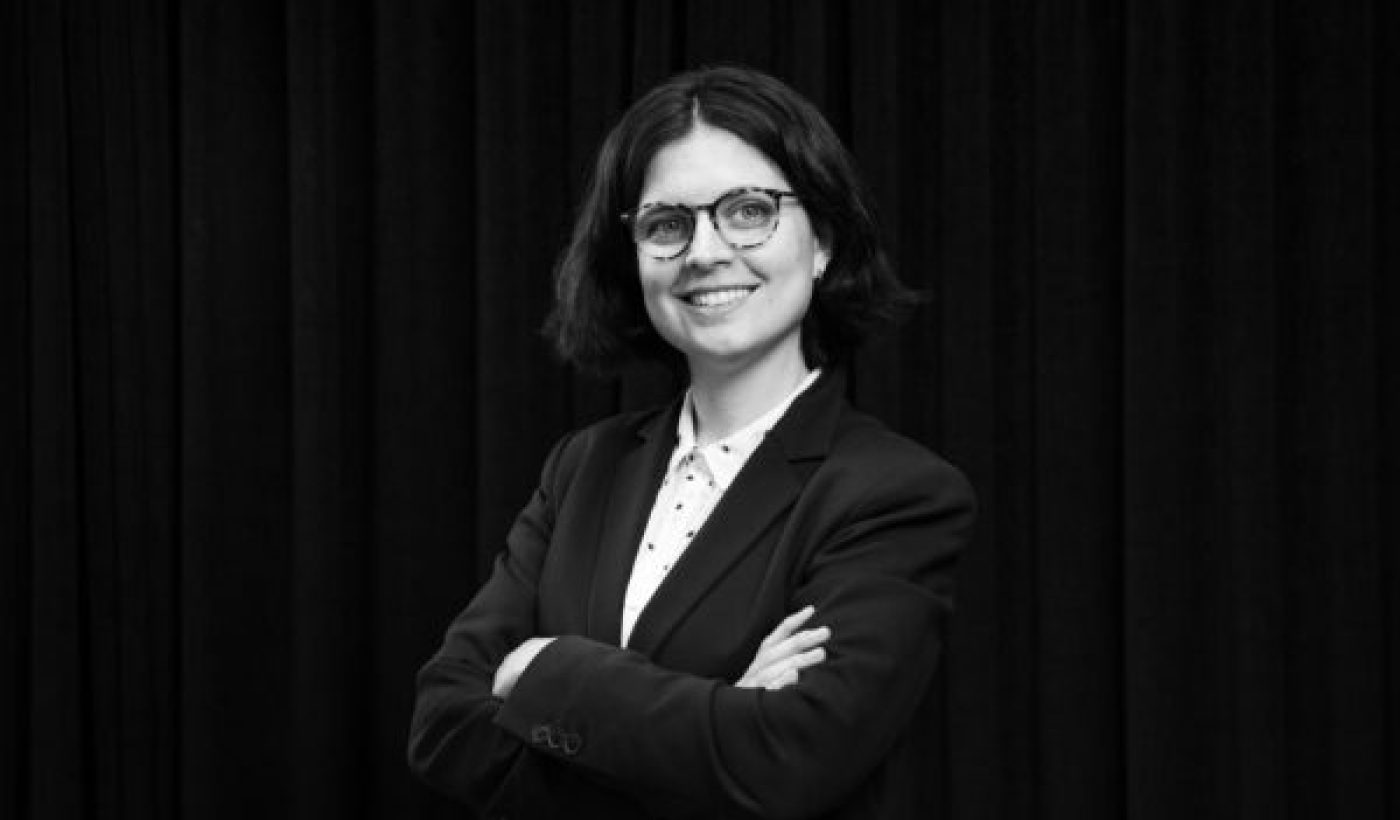

Agnès Riba wanted to be a computer scientist because, years ago, they said it was the profession of the future, but she soon discovered that the subject bored her and ended up in the world of advertising because, according to her, it unites “the artistic with the business”. Strategy director at After, when asked what she does for a living, she answers that she “asks the right questions”. Although she doesn’t have much free time, she knows the dialogues of Lost in Translation by heart and listens to podcasts on culture, feminism and parenting on her way to the agency. We chatted with Agnès about strategy and her particular vision of advertising and life.
Did you always know you wanted to go into advertising?
When I was little I wanted to be a computer scientist because they said it was the future (I belong to that generation that lived the arrival of the internet at home), and well, they weren’t so wrong. But I found the computer extracurriculars extremely boring, and when I had to decide on a university career I was sure that I wanted something that united the artistic world with the business world.
Within a creative agency there are many areas. Why strategy?
Because they gave me feedback at the right time. In my first internship in an agency (Ogilvy), the creative director made me see that I spent more time trying to understand and contribute to the briefing than to the creative response, so she advised me to go towards planning. Thank you, Aina Cortina.
After and strategy go hand in hand. So much so, that the agency always defends that it is at the heart of the business. Without strategy, there are no brands?
Without a strategy, there is hardly anything long-term. Products may be short-term, brands are not. Although, at the beginning, devoting resources to strategy seems to slow down the process, without strategy there are no agreed criteria for making decisions and that, in the long run, is a much greater waste of time and money.
If you had to explain exactly what advertising strategy consists of to someone who is not in the advertising business, how would you do it?
I tell my family that I am in charge of defining what to communicate and the creatives are in charge of how to tell it. Sometimes, I also explain that in strategy we ask the right questions to inspire creativity to find the best solutions. At After we have a maxim: “Less old answers, more new questions”.
This has nothing to do with it, but from which movie do you know its dialogues almost by heart?
No good, because I’m going to tell you a movie I’ve seen many times from my childhood, like Back to the Future or Star Wars, from when I still watched dubbed movies. But now I prefer stories told by women, or at least movies that pass the Bechdel test. I could tell you a line from Sofia Coppola‘s Lost in Translation. I guess it marked me because I saw it at a time in my life when I was also living in Japan.
And if you had to fly to a faraway destination, what book would you pack in your suitcase for the trip?
I wouldn’t mind reading again A Brave New World, by Aldous Huxley, or Nobody Sleeps, by Barbijaputa. Although now I have several books pending that my friends have given me for my 40th birthday, such as Cauterio, by Lucía Lijtmaer.
Agnès, you’re a veteran at After: you’ve been with the agency for 9 years. Of all the projects you have contributed to, which one are you most proud of?
There are two things I am especially proud of. The first is to contribute to the people who work with me and to see them grow. And the second is to promote the After 2030 plan, which is a set of actions to address different SDGs and where we collaborate with social entities, which show us that a better world is feasible.
Strategy director and full-time mother. How does Agnès manage to reconcile?
It would be nice if we also asked this question to parents. In my case, I won’t lie to you, navigating the guilt of not getting to everything as I would like.
What differentiating methodology does After apply so that a brand can find a good positioning?
Shortly after joining After, I was in charge of developing my own methodology that put the agency’s way of thinking in order. I immediately understood how Marc Ros and Risto Mejide sought to shake with the greatest strategic rigor through disruptive questions. That is how the PQC© methodology was born, which, to this day, is still the methodology we use, both internally and in creative processes with clients.
Toni Segarra says that the difference between one brand and another is built much more from the tone than from the speech. What do you think?
I will not be the one to disagree with “Tono” Segarra. Personality has been the great forgotten of traditional branding, because the important thing was the brand message. It was defined with general adjectives such as “approachable, friendly and positive”, which is boring and undifferentiated. But today, brands are not in the business of repeating a message over and over again; they are in a constant conversation. And, in a conversation, the tone is more important than the message. That’s why, when I help define the personality and tone of a brand, I try to go beyond the obvious, even forcing some adjective or attribute to be not quite positive, just like people.
At what level can Artificial Intelligence be applied in a strategy department?
As in all areas, AI helps, but does not replace. Right now we are using AI for the context analysis part. Not only because machines process large amounts of information faster than we do and can make good summaries, but also because they can already draw conclusions by detecting opportunities. We will surely make a lot of progress in its use in the coming years, but, let’s not fool ourselves, AI learns through predictive patterns, and it is precisely the most brilliant strategies transcend the predictable. I am convinced that the intuition of the human mind is essential in strategy.
What do you think will be the main trends in the sector this year?
When the industry talks about trends, it focuses a lot on technologies, formats and channels. But I’m more interested in social trends, how society is changing its values and behaviors. So, I’m sorry to say, I read sociologists more than industry magazines. I would like to mention a couple of trends I am working with. The first is society’s growing interest in mental health and emotional well-being, so if 20 years ago the trend toward healthy consumption changed everything, now mental health is clearly changing consumption priorities as well. The second trend is the difficulty of knowing the truth. There is wide access to information without knowing how to verify it. At the agency, for some time now, with our friends at Verificat, we have been thinking about how brands should take responsibility against misinformation.
What is the main problem facing advertising today?
I answer you with another question, Problem for whom? For society and audiences? For those of us who make a living from advertising? Or for those who need advertising to sell? If we are talking about those who make a living from the effectiveness of advertising, for years now with the infoxication and fragmentation of the audience, the problem is the capacity of reach and relevance of the brands. We have tried with branded content, with micro-segmentation or with brands with purpose. But… it’s not solved. I still see, today, wasted investments in content that reaches very few people. We need to link actions much more to measurable results, to put more science into our profession. I think we strategists have work to do for years.
Who inspires you professionally?
Many of our clients are an inspiration to me. The best thing about our profession is working for a great diversity of sectors and companies and being able to be close to the business leaders who influence our society. I will give you some names: Marieta Jimenez, European Vice President of the science and technology company Merck, who has been and is an inspiration in the empowering leadership model. Also Clara Navarro who, as CEO of the Ship2B Foundation, has shown me that the business world and the social world must go hand in hand. And finally Elena Massot, CEO of the real estate developer Vertix, whom I have recently met and is an example of entrepreneurial culture that keeps a team proud for decades.
What about personnel?
Well, I guess the people I listen to and read, who are not famous. For example, in motherhood and parenting, Paola Roig, Andrea Ros or Judit Besora. In feminism, Ana de Miguel, Iris Borda or Júlia Salander. And my friends. I surround myself with brilliant women, some of them I have met thanks to After, and they are also an inspiration for me.
What does Agnès like to do in her free time?
Free time, what is that? I used to travel and go to concerts and festivals. Now, while commuting to the agency, I listen to podcasts on culture, feminism and parenting.
If you had a time machine and could go back, would you choose the strategy again?
Strategy yes, advertising strategy maybe not. I don’t like to repeat myself, but I think I would inevitably end up in the most strategic part of any industry.
One more thing… a thank you to Adriana Benito, who made this AfterTalk possible by asking the right questions.


